What Is Aluminum Contract Manufacturing? A Buyer’s Guide
What is Aluminum Contract Manufacturing?
A Buyer's Guide
If you build products that rely on aluminum components, you have probably wrestled with the same question every operations leader eventually hits. Do we make this in-house, or hand it to a partner who does it all day, every day? That question is what contract manufacturing is really about. Answer it well and you free up capacity, shorten lead times, and take real cost out of your supply chain. Answer it poorly and you either stretch your own operation past its limits or trust your quality to a shop that cannot keep up.
Contract manufacturing, in plain terms
Contract manufacturing in aluminum means outsourcing the production of aluminum components or finished products to a specialized third-party manufacturer. You own the design, the IP, and the brand. The manufacturer brings the equipment, the labor, and the process expertise. In practice, that might mean cut-to-size material, machining, fabrication, finishing, kitting, or fully assembly-ready components delivered on your schedule. At its best, it feels less like buying a product off a shelf and more like extending your own production line into someone else’s building.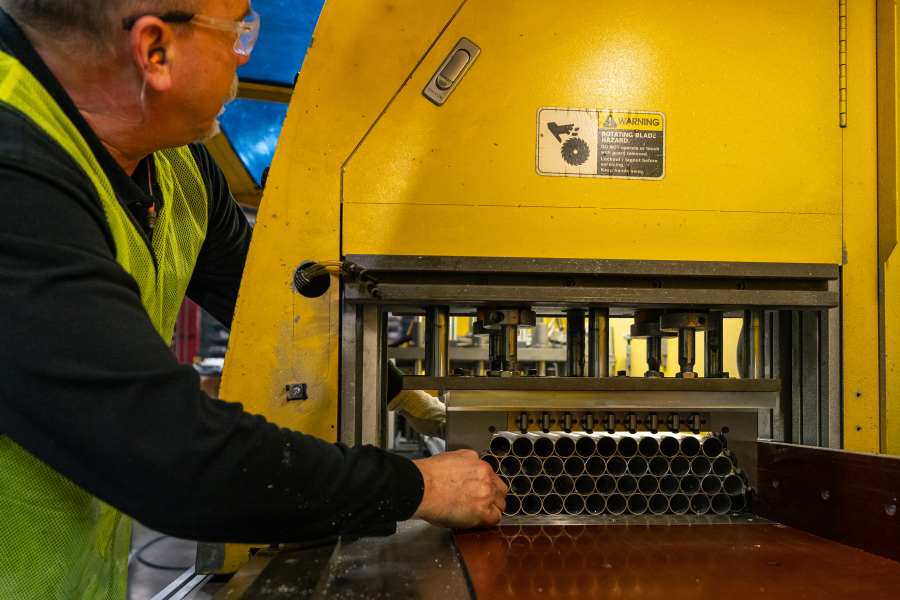
Why manufacturers outsource aluminum work
The biggest reason is capital. Extrusion presses, die casting equipment, and high-end CNC machining centers can run well into seven figures, before you add the floor space, maintenance, and skilled people to keep them busy. Contract manufacturing gives you access to those capabilities without owning them. It also turns fixed costs into a variable cost you pay only for what you order, so you can scale up for a big program without a capital request, then scale back down when demand softens.
Expertise, quality systems, and speed to market
Equipment is only part of it. A good partner also brings metallurgical know-how, established supplier relationships, and the quality systems and certifications your industry expects. There is a speed-to-market argument too. A partner with existing tooling, proven alloy knowledge, and qualified processes can take real time out of a development cycle, which matters when your team is racing to launch a new product. And it frees your people to focus on the work that actually sets your product apart. For a lot of manufacturers, the tipping point comes when a bottleneck in secondary processing starts holding back the whole line.
How to find the right partner
The biggest mistake buyers make is treating this as a quoting exercise. Price is the last filter, not the first. Here is a better sequence.
- Define your requirements before you reach out. Document the alloy, tolerances, finish, annual volume, lead-time expectations, and any regulatory or certification needs. Vague RFQs attract vague partners.
- Match capabilities to your actual need. A high-volume commodity shop is the wrong fit for a precision, tight-tolerance part, and the reverse is true too. Look at their equipment, their secondary operations like machining, fabrication, and finishing, and whether they control their own tooling.
- Check certifications and quality systems, then probe deeper. ISO certification is table stakes. Ask about actual reject rates, the corrective action process, and how they handle first-article inspection. A partner who can’t answer those fluently is a risk.
- Assess supply chain stability. Ask how they source primary versus recycled aluminum, whether they have long-term supply contracts, and how they manage LME price swings. A partner who passes every swing straight through to you without warning is a liability.
- Evaluate scalability in both directions. Everyone asks whether a partner can scale up. Also ask what happens if you need to scale down or pause, and understand minimum orders, tooling ownership, and exit terms before you’re locked in.
- Visit the facility. A site visit separates the real from the polished. Look at housekeeping, which says a lot about process discipline, along with equipment age, workforce stability, and how openly people answer questions on the floor, not just in the conference room.
- Start with a defined pilot. Don’t commit full production volume on day one. Run one component at limited volume to test communication, on-time delivery, quality, and how they handle the first problem. That first mistake tells you everything.
Where Schupan fits
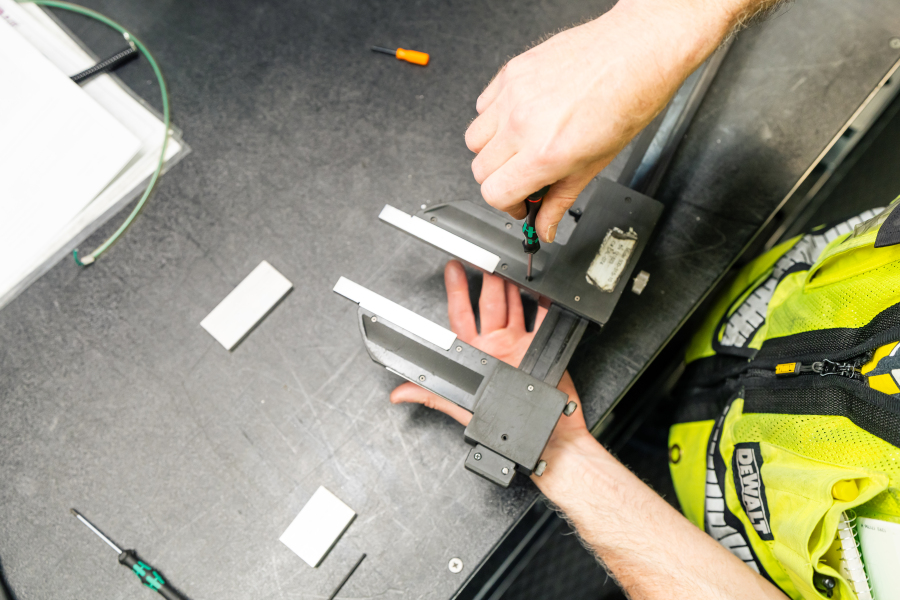
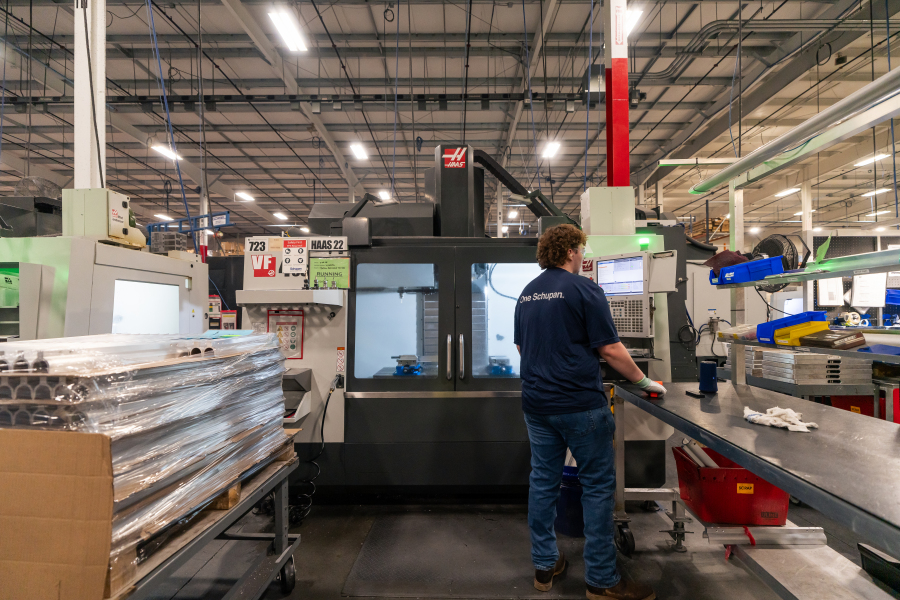
Schupan’s Aluminum & Plastic Sales division sits at an important intersection. We’re not a pure contract manufacturer. We’re a materials and inventory partner that can work upstream of your contract manufacturer or right alongside one. For companies deep in new product development, a reliable aluminum and plastics supplier with managed inventory programs takes risk out of the supply chain that feeds a contract manufacturer, and on simpler components, it can sometimes remove the need for one entirely. The strongest partnerships start early, with the material supplier, the fabricator, and the OEM design team talking before tooling is cut and specs are locked.
Where this connects to the bigger picture
There is a sustainability angle that tends to get missed. A supply partner that also recycles and trades metal can keep the scrap generated during fabrication inside the loop, recovering value from offcuts instead of sending them to a landfill. That is the model Schupan is built around. Material comes in, gets processed to spec, and the byproduct goes back into circulation rather than to waste. For manufacturers chasing their own sustainability targets, that closed loop is a real advantage: the material you buy carries a smaller footprint, and the scrap you generate becomes someone else’s feedstock.
Is contract manufacturing right for you?
If you are short on capacity, fighting lead times, or spending capital on processing that is not core to your business, it is worth a conversation. The fastest way to know is to put a real part in front of a partner and ask what they would do with it. Schupan’s Aluminum & Plastic Sales team is ISO certified and MedAccred accredited for welding, and works every day with manufacturers throughout the Midwest and across the United States to source the right material, process it to spec, and deliver it ready to use.
Have a part or program you'd like to price?

Visit us at MD&M Medtech
Our team will be at MD&M Medtech Midwest, October 28–29, 2026, at the Minneapolis Convention Center.
Stop by booth #3547 in the Medtech Pavilion to talk through a part, a program, or your aluminum and plastics supply.
Medical device manufacturers in particular will want to ask us about our MedAccred-accredited welding.